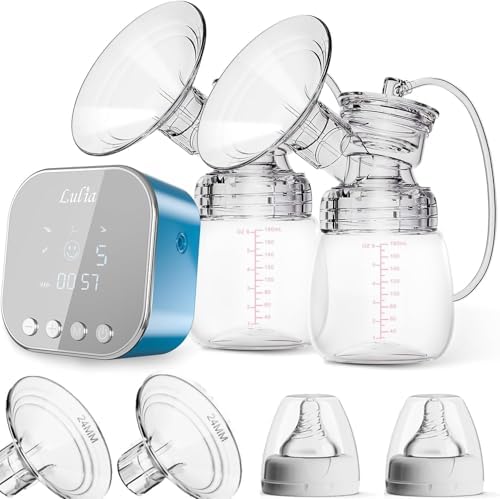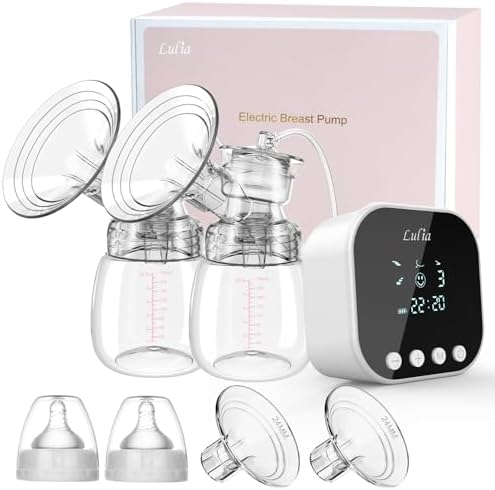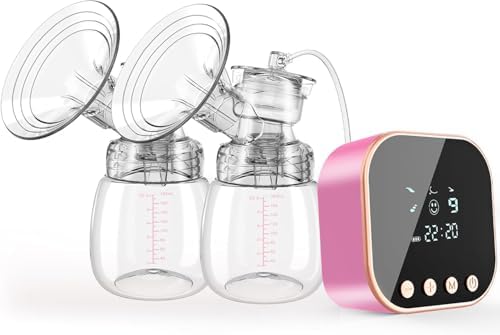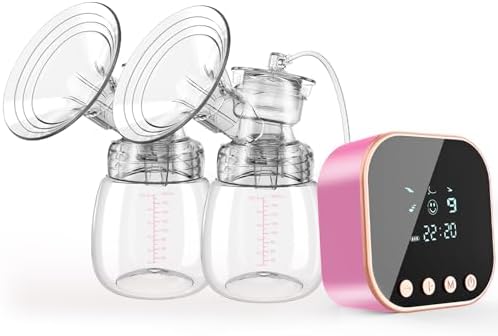
Double Electric Pumps
Lulia Double Electric Breastfeeding Pump, 4 Modes & 9 Levels
- BottlesTwo, 6 oz each
- Modes4 modes, 9 levels
Free shipping over $35 30-day returns Ships across the United States

Tabletop motors that run both sides at once. Four modes, nine levels, an LCD you can read at night, and type-C charging.
Everything below runs the same motor. Read the rows, not the names.
| Double, pink and white | Double, blue | Double, white | Double, pink | |
|---|---|---|---|---|
| Price | $39.99 | $39.99 | $38.99 | $39.99 |
| Rating | 4.2 from 665 | 4.2 from 665 | 4.2 from 665 | No ratings yet |
| Bottles | Two, 6 oz each | Two, 6 oz each | Two, 6 oz each | Two, 6 oz each |
| Modes | 4 modes, 9 levels | 4 modes, 9 levels | 4 modes, 9 levels | 4 modes, 9 levels |
| Flanges | 24 mm | – | – | 24 mm |
| Milk path | Closed, motor stays dry | – | – | – |
| Display | Timer with auto shutoff | – | – | – |
| Finish | Pink and white | Blue | White | Pink |
| Noise | – | Under 40 dB, tested | Under 40 dB, tested | 45 to 55 dB |
Mostly the finish. White, pink and white, and blue are sold as one family: the same motor, the same four modes and nine levels, the same 6 oz bottles and the same pair of tube sets. The solid pink kit is a separate listing that asks ten dollars more and quotes a louder 45 to 55 dB, so treat it as a color choice rather than a step up.
Yes. Both tube configurations are included, so a single side runs without the other line hanging open.
The 2500 mAh cell runs about 240 minutes. In practice that is three to five sessions, fewer if you spend them on the high levels.
These pages describe equipment and routines. They are not medical advice, and nothing here replaces a lactation consultant or your own clinician.
These sit on a table and pull harder than a wearable. If your day includes a fixed pumping spot, this is the shorter session. All three run the same motor, the same four modes and the same 6 oz bottles, so the choice comes down to the finish you would rather look at.
Prices come from the retailer listing and change without notice, so treat the figure on each card as the price at the last check rather than a promise. Where a product has enough public ratings to be meaningful, the score and the count are printed next to it; where it does not, we say so instead of showing a single five star review as if it were a verdict.